A utility-room leak can spread out of sight
A leaking water heater may release water into a basement, closet, laundry area, or mechanical room. A slow leak can go unnoticed behind the equipment or beneath stored items. A larger failure can spread beyond the room before anyone discovers it. The surrounding materials need their own assessment, even if the heater is being replaced.
Water Damage Pros Yonkers connects callers with independent restoration providers. Explain whether the heater is still leaking, where it is located, and whether a plumber has made the area safe. The provider can discuss water removal and an inspection of the walls, flooring, and adjacent spaces affected by the loss.
Leave the equipment to the appropriate professional
Water heaters combine plumbing with electrical or fuel systems, depending on the model. Water near the equipment can introduce hazards beyond the wet floor. Avoid touching wet controls, disconnecting components, or entering standing water to shut something off. If you smell gas or suspect an immediate danger, leave the area and contact the appropriate emergency service or utility.
A qualified plumber or relevant technician should evaluate the heater and source. The restoration provider handles the resulting property damage within the agreed scope. Confirm who is responsible for disconnecting, removing, replacing, and restarting the appliance before scheduling work around it.
Check beyond the footprint of the heater
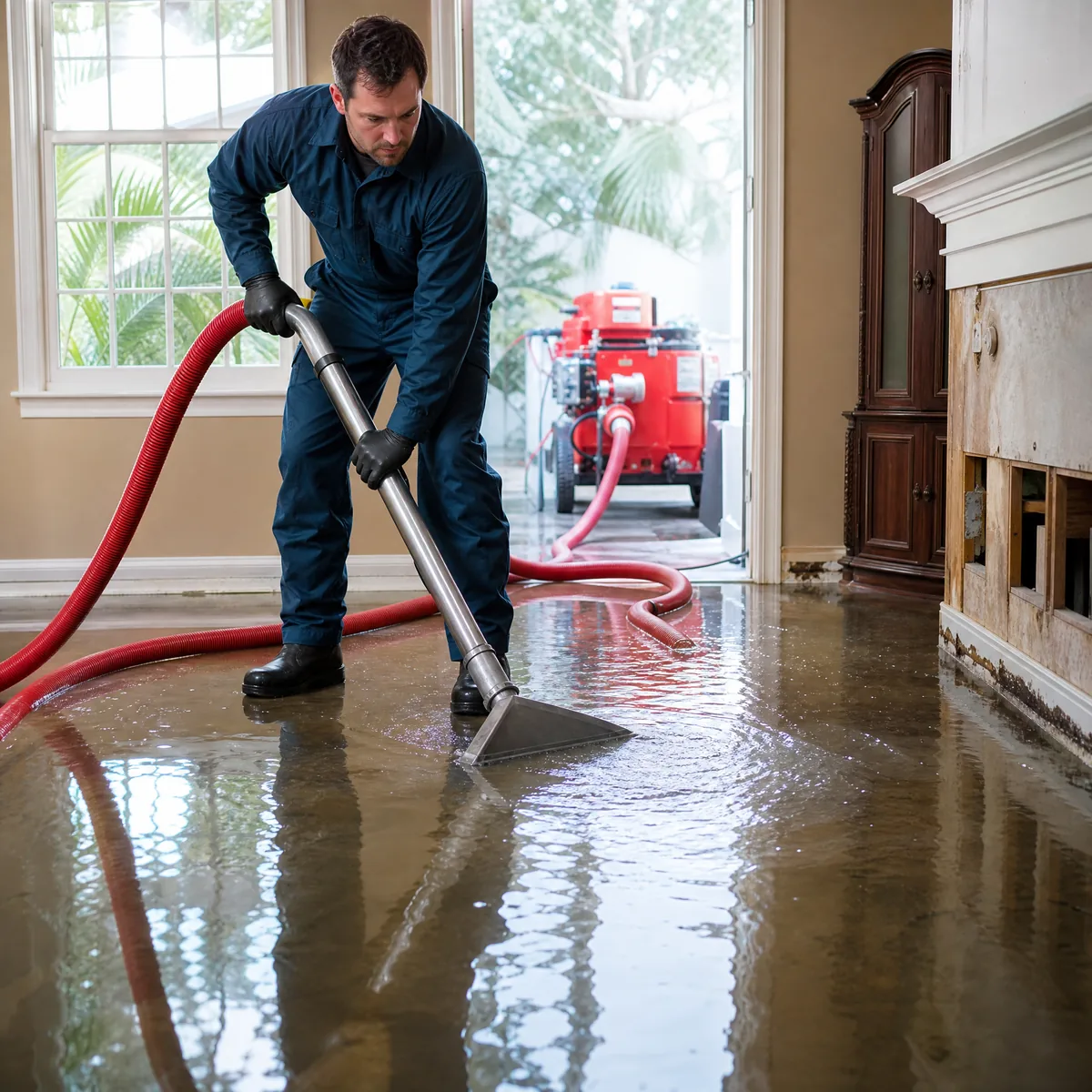
Water can travel beneath a closet threshold, into adjacent flooring, or along the base of a wall. In a basement, it may reach stored contents and finished partitions. In an apartment, a leak can affect a lower unit even if the original room contains only a small amount of visible water.
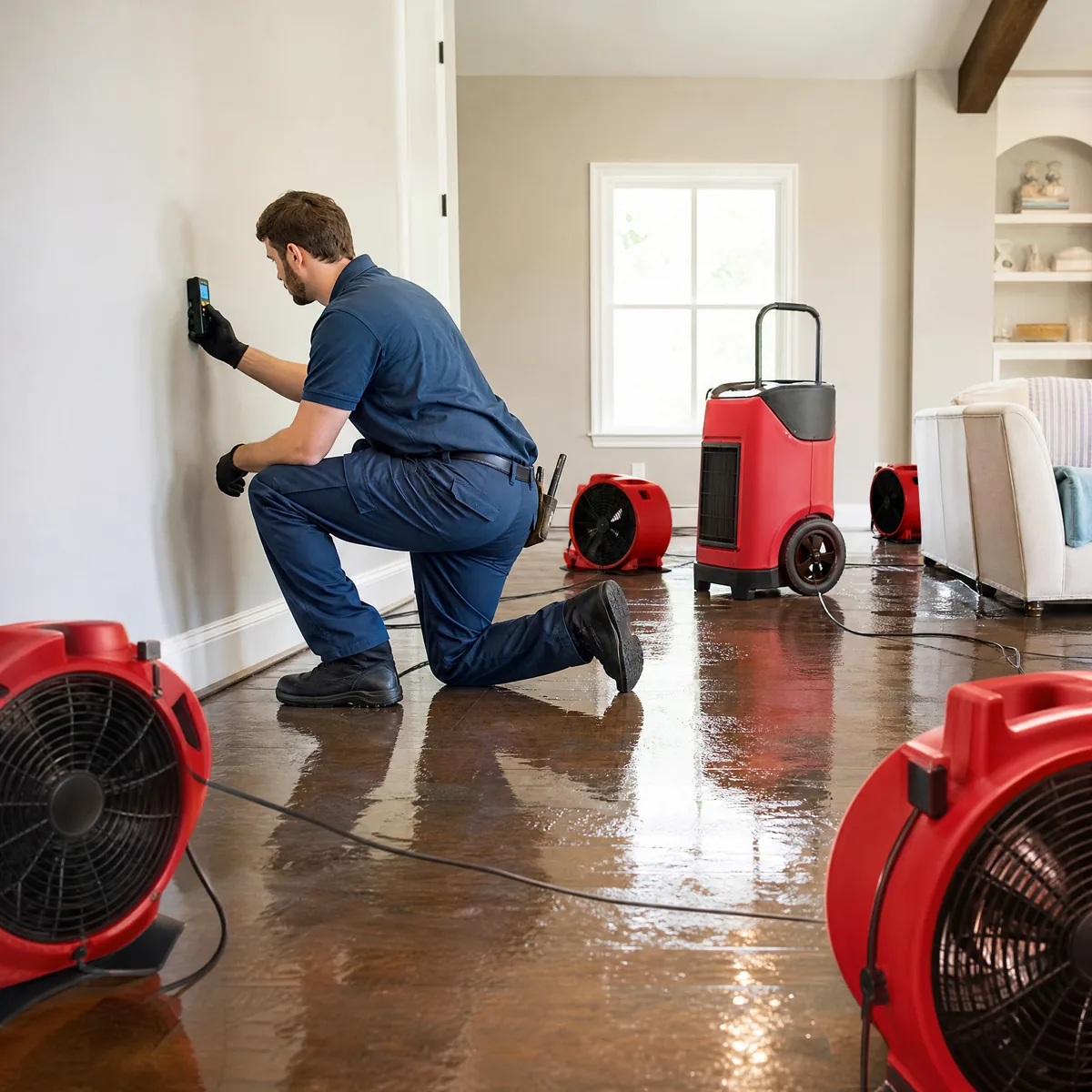
Tell the contractor about discoloration, soft trim, flooring changes, or dampness outside the immediate equipment area. The inspection should consider those signs and the path the water could have taken. A new heater installed over a still-wet floor does not complete the restoration of the surrounding space.
Coordinate equipment access with cleanup
The heater may block inspection or drying of the wall and floor behind it. If replacement is planned, that creates an opportunity for the appropriate contractors to evaluate concealed damage. Coordinate the schedule so the area can be inspected before new equipment limits access again.
Ask the plumber and restoration provider who will communicate about the exposed surfaces and when installation can proceed. Any necessary electrical, gas, or plumbing work belongs with the qualified trade. Documenting these responsibilities reduces confusion when several people are working in a small utility room during an urgent replacement.
What the water-damage work may include
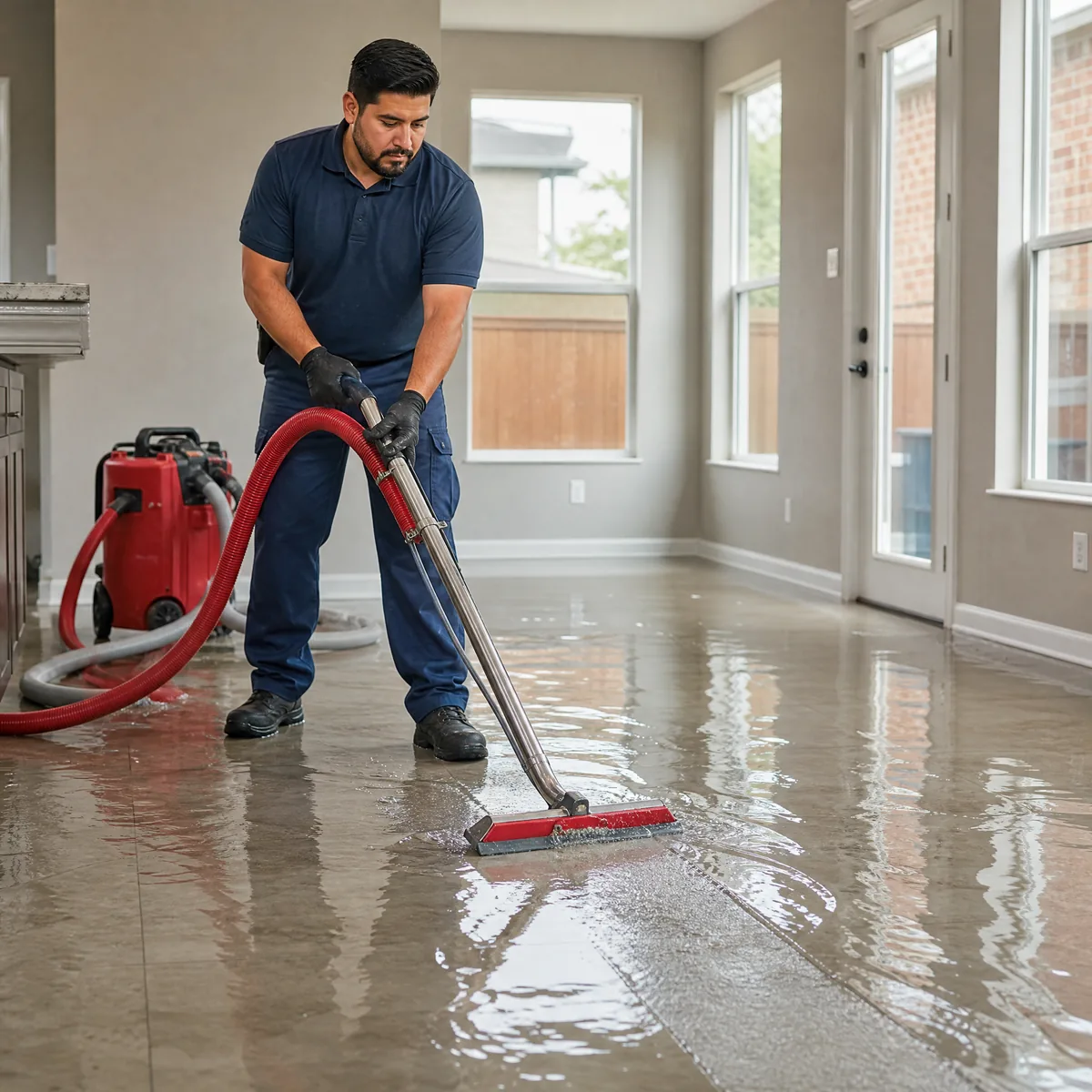
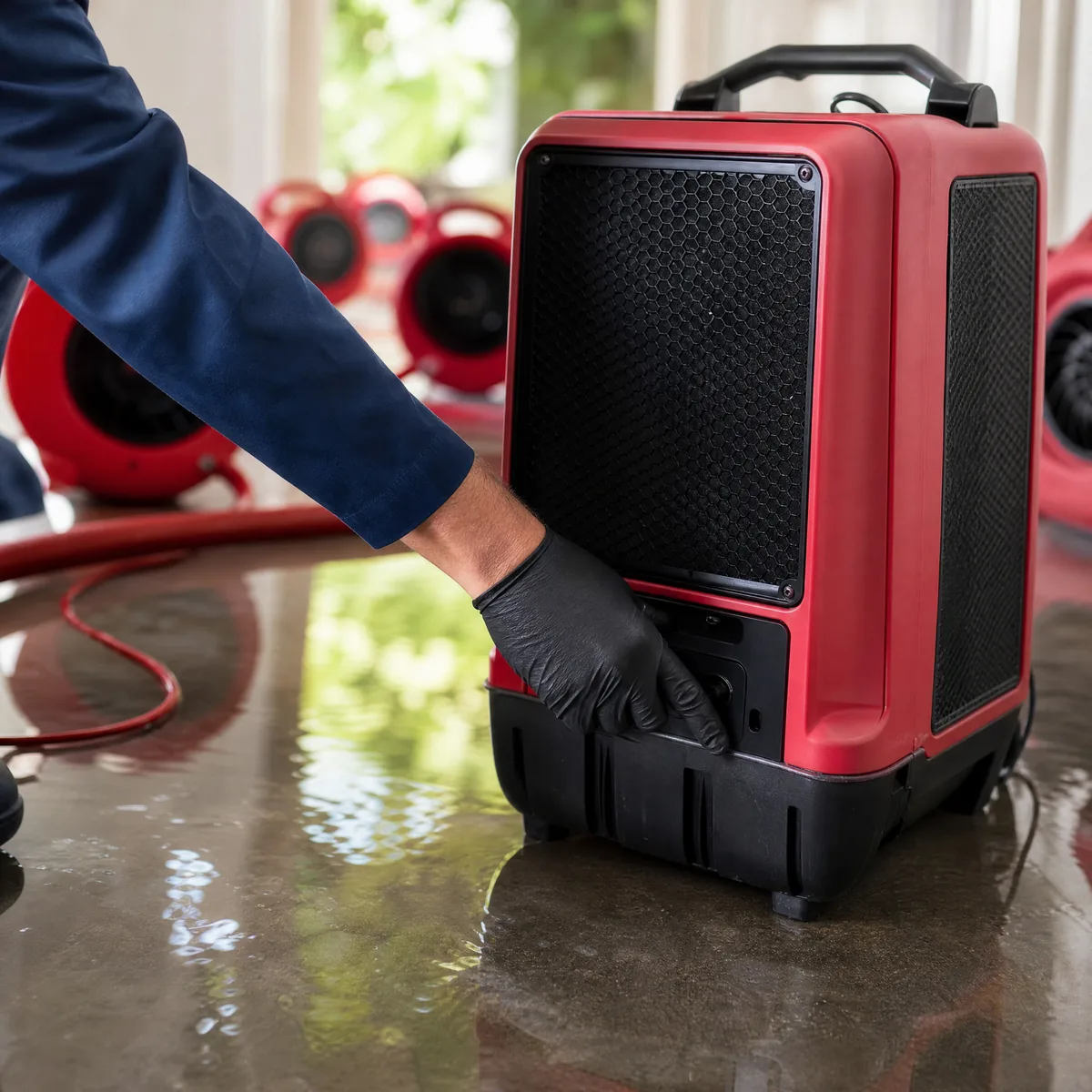
Depending on the loss, the restoration scope may include extraction, removal of affected contents, evaluation of wet wall bases and flooring, and drying of remaining materials. Swollen or unsuitable finishes may need replacement. The contractor should explain which materials are being retained and how their condition will be checked.
Ask whether equipment monitoring and later repairs are included. A proposal for water extraction may not cover painting, trim, floor replacement, or rebuilding a utility closet. Understanding those boundaries helps you plan the full recovery alongside the heater replacement itself.
Distinguish the leak from older moisture damage
Utility rooms can have more than one water source. Condensation, another leaking pipe, a drain issue, or past basement seepage may coexist with the heater failure. The discovery of wet or stained materials does not automatically prove that all damage came from the same event.
Share any history of earlier leaks or repairs. Ask the contractor to explain what appears related to the current loss and what needs further evaluation. Clear documentation is useful when planning repairs or discussing the situation with an insurer. Avoid relying on a single photograph to assign every stain to the heater.
Yonkers apartment and building-system considerations
In a building with shared hot-water equipment, the manager may need to coordinate access, outages, and the restoration work. A leak can affect common storage, corridors, or multiple units. The person authorizing work should know which spaces are involved and who needs to receive updates.
When calling, provide the exact address, the location of the mechanical room, access hours, and the contact for the plumber or superintendent if available. Mention stairs and any restrictions on equipment placement. Those details help the provider determine whether the job is a contained residential loss or part of a larger building response.
Finish with a dry space and a clear record
Before the utility area is closed up, request the relevant drying information and a summary of what was removed or repaired. Retain the heater-service invoice separately from the restoration records. This creates a useful history if moisture appears again or another contractor needs to work in the space later.
Call (866) 552-5141 for water-heater leak cleanup help in Yonkers. If the water has spread through a lower level, see basement water removal. For moisture remaining after the initial cleanup, see structural drying.