Standing water needs a plan, not just a mop
When water covers a basement floor or spreads from a kitchen into the next room, the visible puddle is only part of the problem. Water can travel beneath flooring, soak the bottom of a wall, and settle in spaces that ordinary cleaning cannot reach. Removing the bulk water is the first step toward limiting that spread. The next is finding out what remains wet.
Water Damage Pros Yonkers connects homeowners, tenants, and property managers with independent restoration providers. Call with your location, the source of the water if known, and the rooms affected. The provider can discuss availability and what an on-site assessment should cover. You do not need to know the technical name for the damage before asking for help.
The source changes how the cleanup is handled
A broken supply line, a backed-up drain, and rainwater entering from outside can leave a similar-looking wet floor. They should not automatically receive the same cleanup. The contractor needs to consider where the water came from, what it contacted, and how long it has been present before deciding which materials can be cleaned or dried.
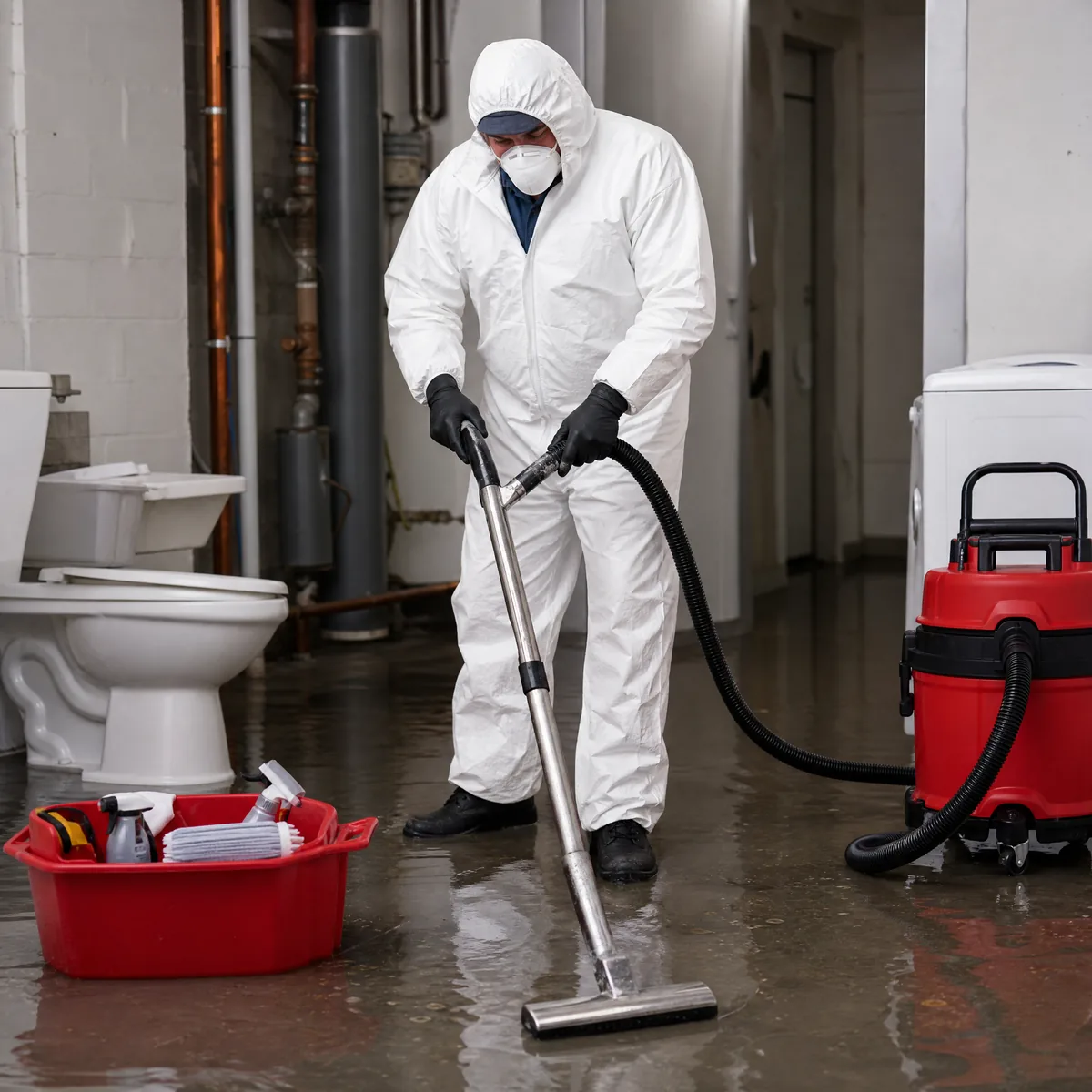
Tell the person taking your call whether the water came from a toilet, sewer, outside flooding, or an unknown source. Avoid walking through suspected contaminated water or carrying wet items into unaffected rooms. A clear description helps the provider prepare for the loss. A photograph may help later, but there is no reason to enter an unsafe room to get one.
What professional extraction can involve
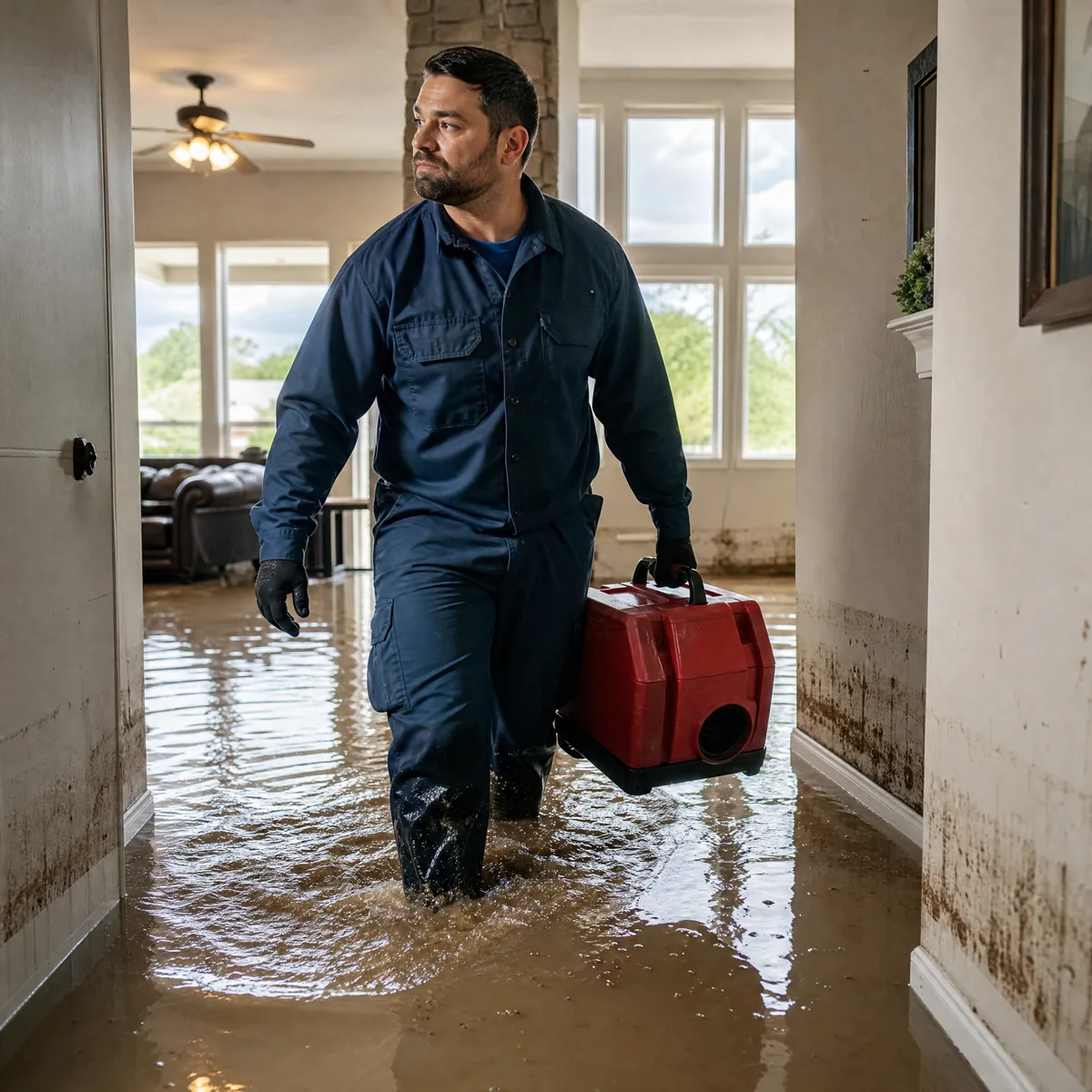
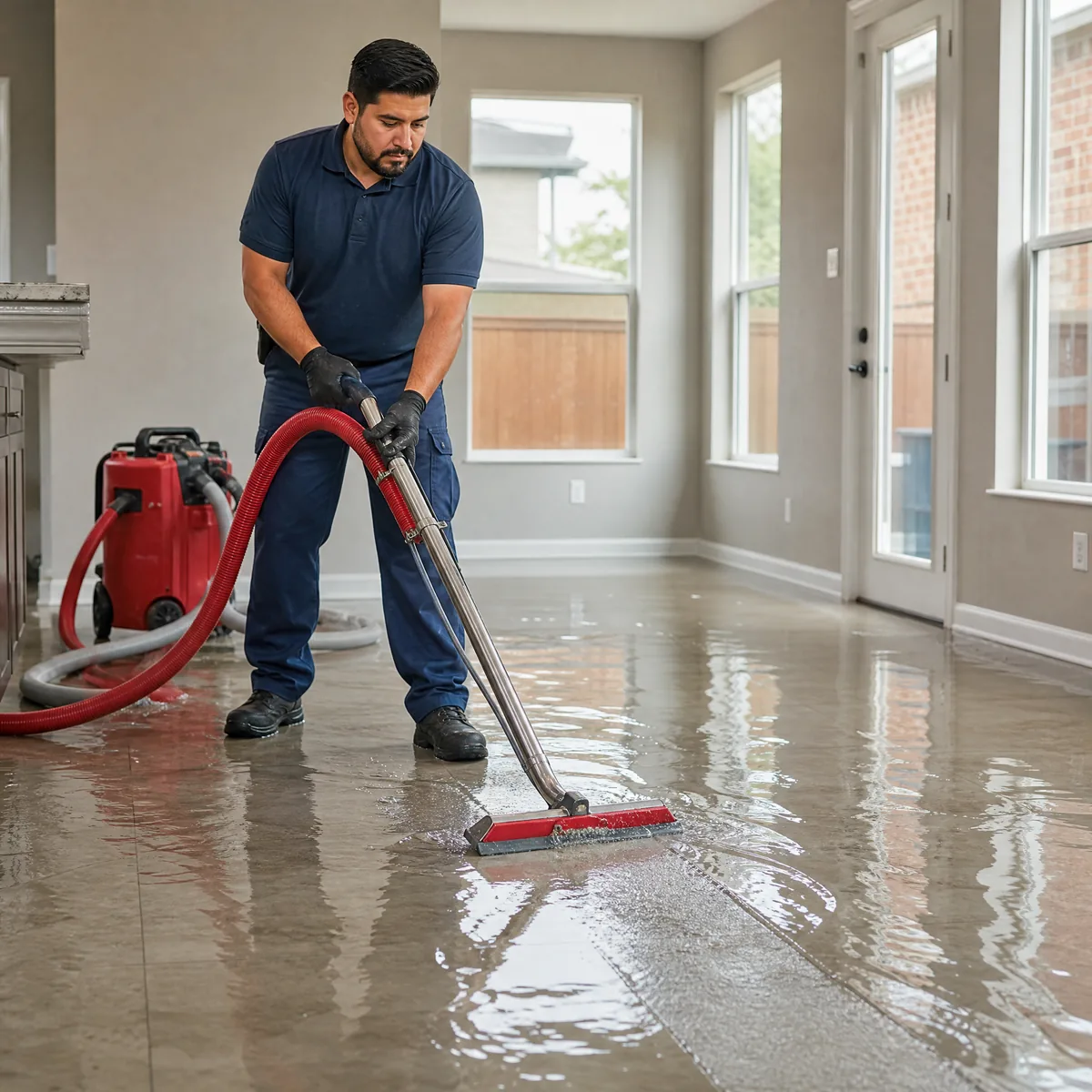
The contractor first checks access, electrical conditions, the depth of the water, and whether the source is still active. Pumps may be appropriate for deeper standing water. Portable or truck-mounted extraction equipment can then remove water from accessible floors and suitable carpeting. The choice depends on the property and the condition of the affected materials.
Furniture, stored belongings, and floor coverings may need to be moved or evaluated so the crew can reach the wet areas. Ask the contractor to explain what can remain in place, what needs a separate cleaning assessment, and which items are unlikely to be salvageable. Agree on disposal before belongings leave the property whenever the situation permits.
Water can remain below an apparently dry floor
Laminate, vinyl, hardwood, carpet padding, and subflooring respond differently to a water loss. A floor can look clean while moisture remains underneath. Baseboards and wall cavities may also need closer attention, especially when water has crossed a room or traveled along a shared wall.
An assessment should identify the affected materials and establish where drying measurements will be taken. Depending on what is found, the plan may include targeted access, removal of damaged materials, air movement, or dehumidification. Structural drying continues the work after extraction. The goal is a documented drying process that prepares the property for the next stage of repair.
Extraction in Yonkers homes and apartment buildings
Access affects how a restoration crew works. A ground-floor room with an exterior entrance presents a different setup from an apartment reached by stairs or a basement behind a narrow interior hallway. Building rules, parking, elevator access, and permission to enter neighboring units can all affect the work plan.
If your property is in Getty Square, Ludlow, Park Hill, or another Yonkers neighborhood, provide the full street address and any access instructions. In a multi-unit building, notify the superintendent or property manager promptly. Water from an upstairs loss can require checks below the original leak, even when the first signs appear in only one apartment.
What you can do before the contractor arrives
Keep people away from wet electrical equipment and any room with sagging ceilings or suspected structural damage. If the water shutoff is reachable from a dry, safe location and you know how to use it, stopping the supply may limit additional damage. Otherwise, leave the area and ask the appropriate professional for help.
Move small, dry belongings out of the affected room only when it is safe. Keep a simple record of when you discovered the water, which rooms were affected, and any work already performed. Do not use a household vacuum on standing water. For sewage or outside floodwater, avoid DIY cleanup and tell the provider about the suspected contamination.
What affects extraction costs and timing
The depth and spread of the water are only two factors. Access, contamination, affected flooring, contents handling, disposal, and the amount of follow-up drying can change the scope. Ask for an explanation of the emergency extraction charges and whether drying equipment, monitoring visits, and repair work are included or priced separately.
Removing standing water can be much faster than drying the building materials it reached. An initial estimate should distinguish those stages. If you are considering an insurance claim, ask what photographs, moisture readings, and itemized invoices the contractor can provide. Your insurer makes coverage decisions; a restoration estimate does not establish that a loss is covered.
Start with the rooms affected and the source of the water
Call (866) 552-5141 to discuss water extraction in Yonkers. Explain whether water is still entering, whether anyone has shut off the source, and whether the affected space is a basement, living area, apartment, or business. Those details are more useful than guessing the total damage over the phone.
If the water came from a backed-up drain, see sewage cleanup. If it entered after heavy rain, see storm and flood cleanup. The provider can help identify the appropriate next step and confirm scheduling for your location.